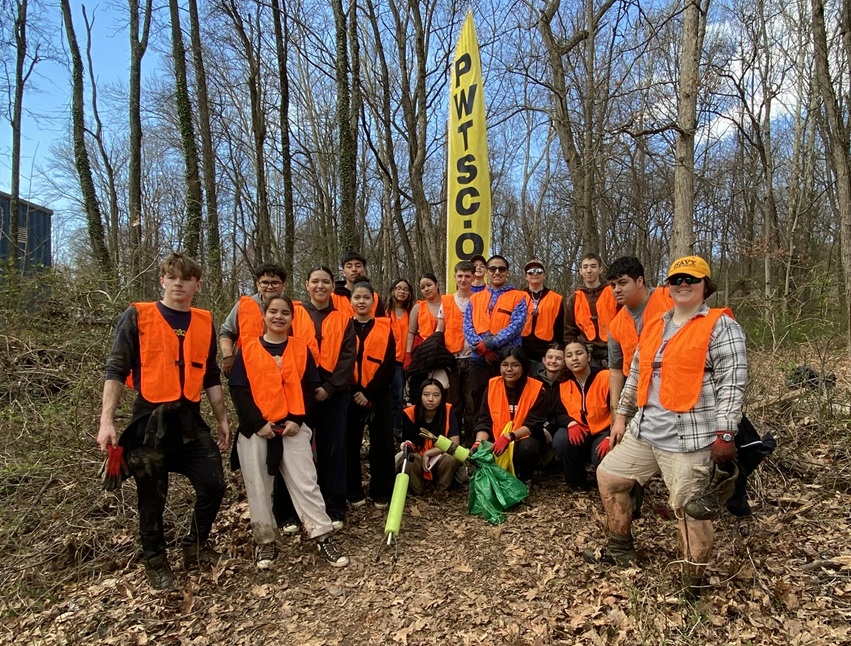
In Prince William County Public Schools (PWCS), volunteerism is not just encouraged—it is often embedded into the student experience. From elementary grades through high school specialty programs, students are expected to contribute meaningful service hours, building both civic responsibility and real-world skills. Increasingly, many of those hours are being spent outdoors—cleaning parks, restoring streams, and protecting local waterways.
Structured Expectations Across K–12
Volunteer requirements in PWCS vary by school and program, but a consistent theme emerges: service is tied to student growth and community engagement.
At the elementary and middle school level—especially in specialty or traditional schools—students are required to complete a set number of hours annually. For example:
- Grades 1–3: about 10 hours
- Grades 4–5: about 15 hours
- Grades 6–8: about 20 hours
At the high school level, expectations often scale up or become tied to academic programs. Some specialty tracks require long-term commitments, such as:
- 40 hours of service across four years in certain programs
Other programs and clubs—such as honor societies or Advanced Placement tracks—may require even more extensive service portfolios. Across all levels, students must document, verify, and reflect on their volunteer experiences, reinforcing that service is both a requirement and a learning process.
From Requirement to Movement: Environmental Volunteering
While students fulfill hours in many ways—libraries, tutoring, and school events—environmental cleanup has become one of the most visible and impactful pathways.
Across Prince William County, students frequently participate in:
- Park cleanups coordinated by county agencies
- Stream restoration and litter removal projects
- River and watershed cleanups tied to regional environmental groups
These activities align well with PWCS guidelines, which emphasize that volunteer work must benefit the broader community rather than a closed group . Cleanup efforts meet that standard while offering hands-on, visible results.
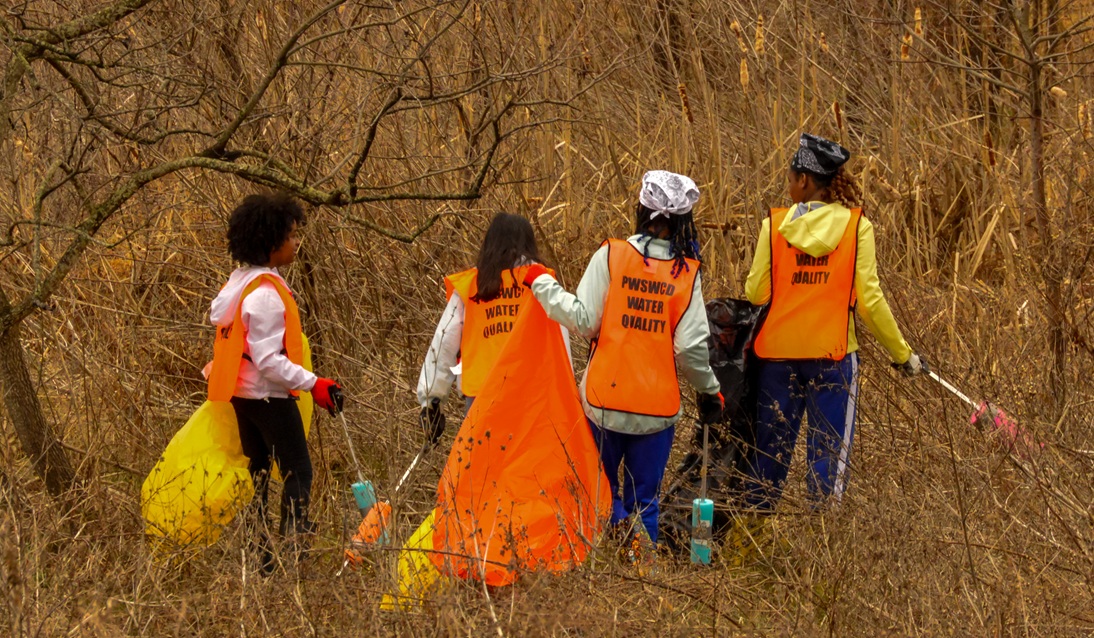
Students often describe these experiences as more engaging than traditional service. Instead of logging hours indoors, they work in teams, collect measurable amounts of trash, and see immediate environmental improvements. The PW Trails & Streams Coalition and PW Soil & Water Conservation District sponsor annual cleanups of Marumsco Creek, Neabsco Creek and the Occoquan. Students from several schools participated in the March 2026 Neabsco cleanup (click here to see pictures of the event). Cadets from the Jr ROTC (Navy) group at Osbourn Park HS have made a difference at the Marumsco Creek trash cleanups (see pictures here).
Parks, Streams, and Rivers: Local Impact
Prince William County’s extensive park system and proximity to waterways like the Occoquan River and Potomac tributaries provide ideal settings for student service.
Typical student-led or student-supported activities include:
- Removing plastic waste and debris from hiking trails
- Clearing stormwater runoff areas near neighborhoods
- Participating in Earth Day-style watershed cleanups
These efforts mirror larger regional initiatives. For instance, major cleanups in the Washington, D.C. area regularly draw hundreds or even thousands of volunteers to remove tons of trash from rivers and surrounding land . Students in PWCS are part of this broader environmental culture, often volunteering alongside families, nonprofits, and civic groups.
A National Trend: Cleanup as Community Culture
The rise of student participation in environmental cleanup reflects a broader national movement. A recent Washington Post report highlights how volunteer trash collection has evolved into a social and civic phenomenon in cities like New York.
Groups there gather regularly not only to remove litter but also to build community and raise awareness. Participants have collected thousands of pounds of trash while turning cleanup into a shared, even social, activity . These efforts are often driven by:
- Environmental concern
- Civic pride
- A desire for connection and purpose
This trend resonates strongly with students in Prince William County. What begins as a requirement increasingly becomes a habit—and sometimes even a passion.
Why Cleanup Work Resonates With Students
Environmental volunteering offers several advantages that make it especially appealing:
1. Visible Results
Students can immediately see the difference they make—bags of trash removed, cleaner trails, clearer streams.
2. Social Engagement
Like the New York cleanup groups, local efforts often become group activities, blending service with friendship and teamwork.
3. Relevance to Global Issues
Concerns about pollution, climate change, and sustainability make environmental service feel meaningful and urgent.
4. Accessibility
Cleanup events are widely available and open to all students, aligning with PWCS requirements that service opportunities be broadly accessible .
Beyond Hours: Building Lifelong Habits
What distinguishes environmental cleanup from other forms of volunteering is its potential to shape long-term behavior. Students who participate in park and river cleanups often report:
- Increased awareness of litter and waste
- Changes in personal habits (recycling, reducing plastic use)
- Continued volunteering beyond required hours
In this way, PWCS’s structured requirements are achieving a deeper goal: transforming service from an obligation into a mindset.
Conclusion
Volunteer requirements in Prince William County Public Schools ensure that students engage with their communities throughout their education. Increasingly, those hours are being fulfilled outdoors—through park maintenance, stream restoration, and river cleanups that directly improve the local environment.
At the same time, a broader cultural shift—seen in cities like New York—is redefining cleanup work as a form of civic engagement and social connection. For students in Prince William County, this convergence means that community service is no longer just something to complete—it’s something to experience, share, and carry forward.
And in the process, they are not only meeting requirements—they are helping reshape the places they call home.